

Your loved one just started Dialectical Behavior Therapy (DBT). Maybe their therapist told you it’s one of the most effective treatments for emotional struggles. But no one explained what that actually means for you, the person at home.
Here’s something important: DBT doesn’t just happen in the therapy room. Research shows the therapy works best when the people around the loved one understand what the person in therapy is learning. You don’t need to become a therapist. But even basic knowledge of DBT can make a real difference in how well therapy goes.
Let’s take a brief look at the basics of DBT in general, why family understanding matters, and what you can do to support someone who is in DBT therapy.
What Is DBT? A Simple Explanation
DBT was created by Dr. Marsha Linehan for people who struggle with strong emotions; who feel things more intensely than others and have a harder time calming down. They stay upset for a longer time than most. To manage these emotions they may turn to unhealthy strategies. DBT is focused on being able to help them manage their emotions in a healthy way. Full DBT includes individual therapy, skills class/group, and skills coaching.
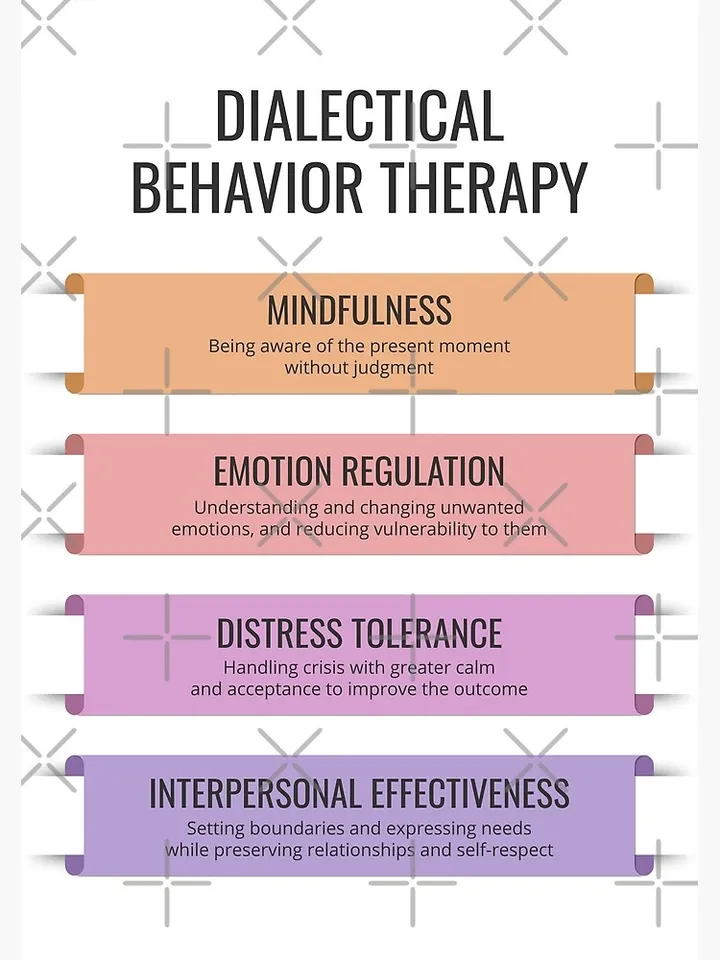
In the skills group/class, DBT teaches four main sets of skills:
- Mindfulness — paying attention to the present moment without judgment
- Distress Tolerance — getting through a crisis without making things worse
- Emotion Regulation — understanding and managing strong emotions
- Interpersonal Effectiveness — asking for what you need and keeping relationships healthy. These skills work on decreasing the roller coaster relationships that emotionally sensitive people often have.
People in DBT don’t just talk about their problems. They practice real skills in sessions, in homework, and in daily life. That’s what makes it different from many other types of therapy.
| Good to Know: DBT is used to treat borderline personality disorder (BPD), depression, anxiety, eating disorders, self-harm, and more. It works for teens and adults alike. |
Why Family Understanding Makes Therapy More Effective
Imagine your loved one spends an hour learning how to manage overwhelming emotions. Then they come home to an environment where they experience the same patterns of interaction and triggers. Changing behavior outside of the therapy office is difficult! It would be like watching a video on how to play the piano but never actually doing it
Now imagine the opposite. They come home and someone understands what they’re working on. The people around them use similar language. Nobody dismisses what they’re feeling (emotionally sensitive people are often reactive to any invalidation of their feelings). That’s a much better environment for growth.
Research supports this. Studies on DBT show that family involvement improves outcomes. When families understand DBT, their loved ones are:
- More likely to stay in treatment
- Better able to practice skills between sessions
- Less likely to be in emotional crisis at home
- More hopeful about recovery
The bottom line: therapy doesn’t stop when the session ends. What happens at home matters just as much.
Common Ways Families Accidentally Get in the Way
In working with many families over the years, we’ve noticed some common patterns. Families don’t do this on purpose, and it’s hard for the family because what works for the child who doesn’t struggle with emotion regulation often doesn’t work for the child who has emotion dysregulation.
These patterns can unintentionally slow down a loved one’s progress in therapy.
Invalidating feelings
Saying things like “You’re overreacting” or “Just calm down” feels logical when someone is upset. But for a person in DBT, this is called invalidation and it can trigger even stronger emotional reactions. Their nervous system is wired to feel things deeply. Telling them their feelings are wrong often makes things worse.
Solving problems too quickly
When someone is in distress, it’s natural to want to fix it. But jumping to solutions before a person feels heard can make them feel dismissed. DBT therapists teach clients to feel understood first, then solve problems. Check out your understanding, then work on collaboratively finding ideas to help. Families can do this too.
Walking on eggshells — then snapping
Many families go back and forth between over-accommodating and losing patience. This inconsistency is hard for someone in DBT, who is learning to rely on steady, predictable responses. Consistency from the people they love makes skills practice much easier.
Assuming therapy alone is enough or will work right away
DBT is a big commitment for your loved one. Recovery is a team effort. Plus recover is not in a straight line; there are likely to be ups and downs. If you have questions about progress, ask your loved one’s therapist. Comments that are understandable when you are frustrated, such as “This isn’t working,” or “You’re still just the same and we pay all this money for nothing,” are discouraging. Expect there to be progress and backsliding and progress and backsliding throughout the therapy process.
What you can do
I’ve listed some steps you can take to support your loved one who is in DBT Therapy.
Learn DBT Skills for Yourself
One of the best ways for you to support your loved one is by learning DBTSkills yourself. At the DBT Center of Houston, we offer Family Groups to teach you the same skills that your loved one is learning. Soon, we’ll post a family skills course here on DBTWise that you can learn at your own pace and offer a subscription email to learn skills.
Talk to Your Loved One’s Therapist
Family involvement in the actual treatment looks different depending on the individual client. But there are ways to stay informed and involved regardless.
- Ask your loved one if they’d be willing to share basic information about what they’re learning in therapy. Then listen and see how you could apply it to yourself.
- With permission, ask the therapist if there are family resources, handouts, or books they recommend
- Consider the DBT Family Connections program from NEABPD
- Consider your own support, like therapy or a support group, to manage your own stress
- Subscribe to our monthly email on DBT Skills for families (coming soon!)
Remember: your loved one’s therapy is confidential. The goal isn’t to get information about their sessions. It’s to build a home environment that supports what they’re working on.
Taking Care of Yourself, Too
Supporting someone in intensive therapy is emotionally draining. It’s easy to pour everything you have into helping your loved one and have nothing left for yourself.
DBT actually has a skill for this — it’s called “building mastery and positive experiences.” The idea is that taking care of yourself isn’t selfish. It’s what makes you more effective as a support person.
Give yourself permission to:
- Set limits on how much emotional support you can give at once
- Ask for help from others — you don’t have to do this alone
- Recognize your own stress and take it seriously
- Celebrate small wins, even when progress feels slow
| Remember: You cannot pour from an empty cup. Your well-being matters; not just for you, but for your entire family. |
The Bottom Line
DBT is one of the most researched and effective therapies available for people who struggle with strong emotions. AND therapy works best when it’s backed up at home.
You don’t need to become a DBT expert. Learning a few key ideas, like validation, consistent responses, and the role of skills practice, can make a real difference in your loved one’s progress.
When families understand DBT, everyone benefits: your loved one makes faster progress, conflict at home decreases, and the whole family moves toward healing together.
| Want to Learn More About DBT? DBT Wise Training offers professional training in DBT and RO DBT for therapists, as well as resources for families. Dr. Karyn Hall is one of only three certified RO DBT supervisors in the United States and is also certified by the Linehan Board of Certification. Visit us at: www.dbtwisetraining.com |
Related Reading
The Power of Validation. Karyn Hall. Written for parents of children, and the concepts apply to all ages.
So Your Kid Needs DBT Lyvia Chriki.
Loving Someone with Borderline Personality Disorder. Shari Manning